
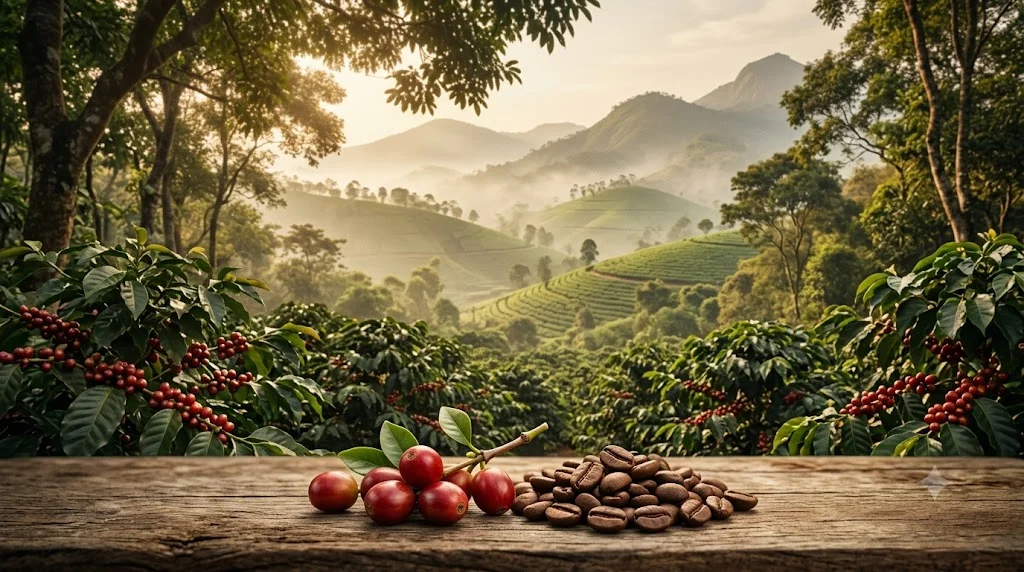
India is known for its tea, but its coffee story is just as fascinating.
From the misty hills of Karnataka to the plantations of Kerala and Tamil Nadu, Indian coffee is grown across diverse landscapes, climates, and elevations. These differences influence how coffee develops its aroma, body, acidity, sweetness, and overall character.
For coffee lovers, understanding Indian coffee regions is one of the best ways to understand why different coffees can taste so different—even when they are grown in the same country.
Cherritos Coffee sources coffee from renowned Indian growing regions, including areas such as Chikmagalur, Coorg, and Bababudangiri, with a focus on preserving the character of the beans through careful roasting.
Why Does Coffee Origin Matter?
Coffee is an agricultural product, which means where it grows matters.
Factors such as:
- Altitude
- Soil
- Rainfall
- Temperature
- Shade
- Processing
- Coffee variety
can influence the final cup.
This concept is often called terroir.
Just as grapes from different vineyards can produce wines with different characteristics, coffee beans from different regions can have their own distinct flavor profiles.
1. Chikmagalur: The Heart of Indian Coffee
Chikmagalur is one of India’s most recognized coffee-growing regions.
Located in Karnataka, the region is surrounded by hills, forests, and coffee plantations. Its elevation and climate create favorable conditions for Arabica cultivation.
Coffee from Chikmagalur can offer a balanced drinking experience, often associated with:
- Chocolate-like sweetness
- Nutty notes
- Mild acidity
- Smooth body
- Pleasant aroma
For people discovering Indian specialty coffee for the first time, Chikmagalur is an excellent region to explore.
2. Coorg: Coffee Among the Hills and Forests
Coorg, also known as Kodagu, is another important coffee-growing region in Karnataka.
The region is famous for its lush green landscapes, shaded plantations, and distinctive coffee-growing environment.
Coffee from Coorg can offer a rich and balanced character, making it suitable for both black coffee and milk-based preparations.
The region’s coffee heritage is deeply connected with the landscape itself, where coffee plantations exist alongside native trees and diverse vegetation.
Cherritos highlights Coorg among the Indian regions contributing to its coffee story and sourcing philosophy.
3. Bababudangiri: Where Indian Coffee History Begins
Bababudangiri holds a special place in India’s coffee history.
The hills of Karnataka are traditionally associated with the early introduction and cultivation of coffee in India.
Today, the region remains an important part of India’s coffee landscape.
Its high-altitude environment and distinctive growing conditions contribute to coffees with complexity and character.
For coffee enthusiasts interested in the history behind Indian coffee, Bababudangiri is a fascinating place to start.
4. Wayanad: Coffee from Kerala
Kerala is another important coffee-producing state in India.
Wayanad, located in the Western Ghats, is known for its lush plantations and favorable agricultural environment.
Coffee grown in the region can benefit from the area’s abundant rainfall, shade, and biodiversity.
Depending on the variety and processing method, Wayanad coffees can offer a balanced combination of body, sweetness, and acidity.
5. Araku Valley: High-Grown Coffee from Andhra Pradesh
Araku Valley has become increasingly recognized among Indian coffee enthusiasts.
Located in the Eastern Ghats of Andhra Pradesh, the region offers high-altitude growing conditions and a unique coffee ecosystem.
Araku coffee is often associated with cleaner, more refined flavor characteristics.
The region also demonstrates how India’s coffee industry extends beyond the traditional Karnataka and Kerala growing belts.
What Makes Indian Coffee Different?
Indian coffee has several characteristics that make it particularly interesting.
Shade-Grown Cultivation
Many Indian coffee plantations grow coffee under shade trees.
This creates a distinctive plantation ecosystem and helps protect coffee plants from intense sunlight.
High-Altitude Plantations
Higher elevations can contribute to slower coffee cherry development.
This can allow complex flavors and aromas to develop within the bean.
Rich Biodiversity
Indian coffee estates are often part of diverse agricultural landscapes.
Coffee may grow alongside trees, spices, fruits, and other crops.
This creates a unique environment for cultivation.
Distinctive Monsoon Influence
India’s monsoon climate also plays an important role in coffee cultivation and processing.
The country’s weather patterns contribute to unique coffee-processing traditions, including the famous Monsooned Malabar style.
Arabica vs Robusta in India
India produces both Arabica and Robusta coffee.
Arabica
Arabica is generally known for its:
- Aromatic character
- Smooth body
- Complex flavor
- Greater perceived acidity
- Sweetness
Robusta
Robusta typically offers:
- Stronger body
- Higher bitterness
- More intense character
- Excellent crema potential
- Higher caffeine content
The choice between Arabica and Robusta ultimately depends on your preferred coffee experience.
Cherritos focuses on 100% pure Arabica coffees sourced from selected Indian estates.
How Roast Level Changes Regional Coffee
Origin isn’t the only factor that determines flavor.
Roasting also plays a major role.
A lighter roast can preserve more of the bean’s original characteristics, while a darker roast can create deeper roasted, caramelized, and intense flavors.
This means the same regional coffee can taste very different depending on how it is roasted.
Cherritos uses small-batch roasting to develop the natural character of its coffees while aiming for balance and smoothness.

How to Choose Indian Coffee Based on Your Taste
Not sure where to start?
Use your preferred flavor style as a guide.
If you like smooth and balanced coffee
Look for coffees from traditional Karnataka growing regions such as Chikmagalur and Coorg.
If you enjoy bold coffee
Try a darker roast or a coffee with a fuller body.
If you prefer bright and complex flavors
Explore high-grown Arabica coffees and lighter roast profiles.
If you enjoy rich chocolate and nutty flavors
Look for medium to medium-dark roasted coffees with naturally sweet tasting characteristics.
Does Coffee Region Affect Caffeine?
Not necessarily in a simple way.
Caffeine content depends on several factors, including:
- Coffee species
- Variety
- Brewing method
- Serving size
- Roast
- Coffee-to-water ratio
Robusta generally contains more caffeine than Arabica.
So if caffeine is your priority, don’t choose coffee based on region alone. Consider the species and brewing method as well.
How to Taste Coffee from Different Indian Regions
One of the most enjoyable ways to explore Indian coffee is through comparison.
Try brewing two coffees using the same:
- Grinder
- Water
- Coffee-to-water ratio
- Brewing method
- Temperature
Then compare them side by side.
Pay attention to:
Aroma: What do you smell before drinking?
Acidity: Does the coffee feel bright or mellow?
Body: Does it feel light, creamy, or heavy?
Sweetness: Do you notice chocolate, caramel, fruit, or sugar-like qualities?
Finish: What flavors remain after swallowing?
This simple exercise can help you understand how origin affects your coffee experience.
Indian Coffee Is More Than a Beverage
Indian coffee represents geography, agriculture, history, and craftsmanship.
From the hills of Chikmagalur and Coorg to the plantations of Kerala and other emerging growing regions, every coffee-growing area contributes something different to India’s coffee identity.
For today’s coffee drinker, exploring these origins is a way to discover more than flavor.
It is a way to understand where the coffee comes from, how it was grown, and why it tastes the way it does.
At Cherritos, the journey begins at origin, with carefully selected Indian estates, 100% Arabica beans, and small-batch roasting designed to bring out the character of each coffee.
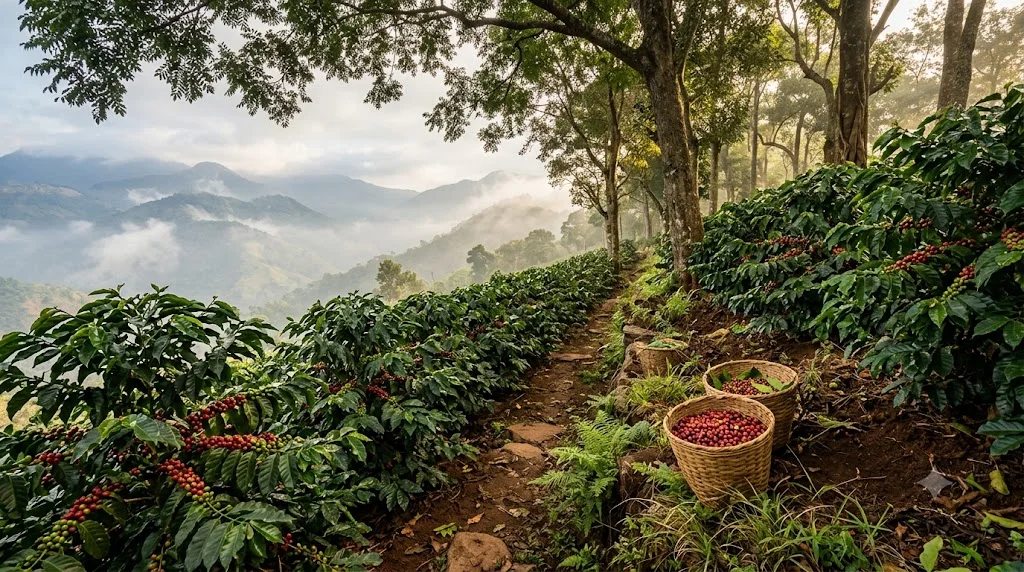
The next time you drink an Indian coffee, take a moment to look beyond the cup.
Think about the region where it was grown.
Think about the altitude, climate, soil, shade, variety, processing, and roasting that shaped its final flavor.
Because great coffee isn’t created in a single step.
It begins at the origin.
Explore Indian Coffee with Cherritos
Discover Cherritos’ range of freshly roasted coffees sourced from Indian estates and explore different roast profiles and flavor experiences.


