
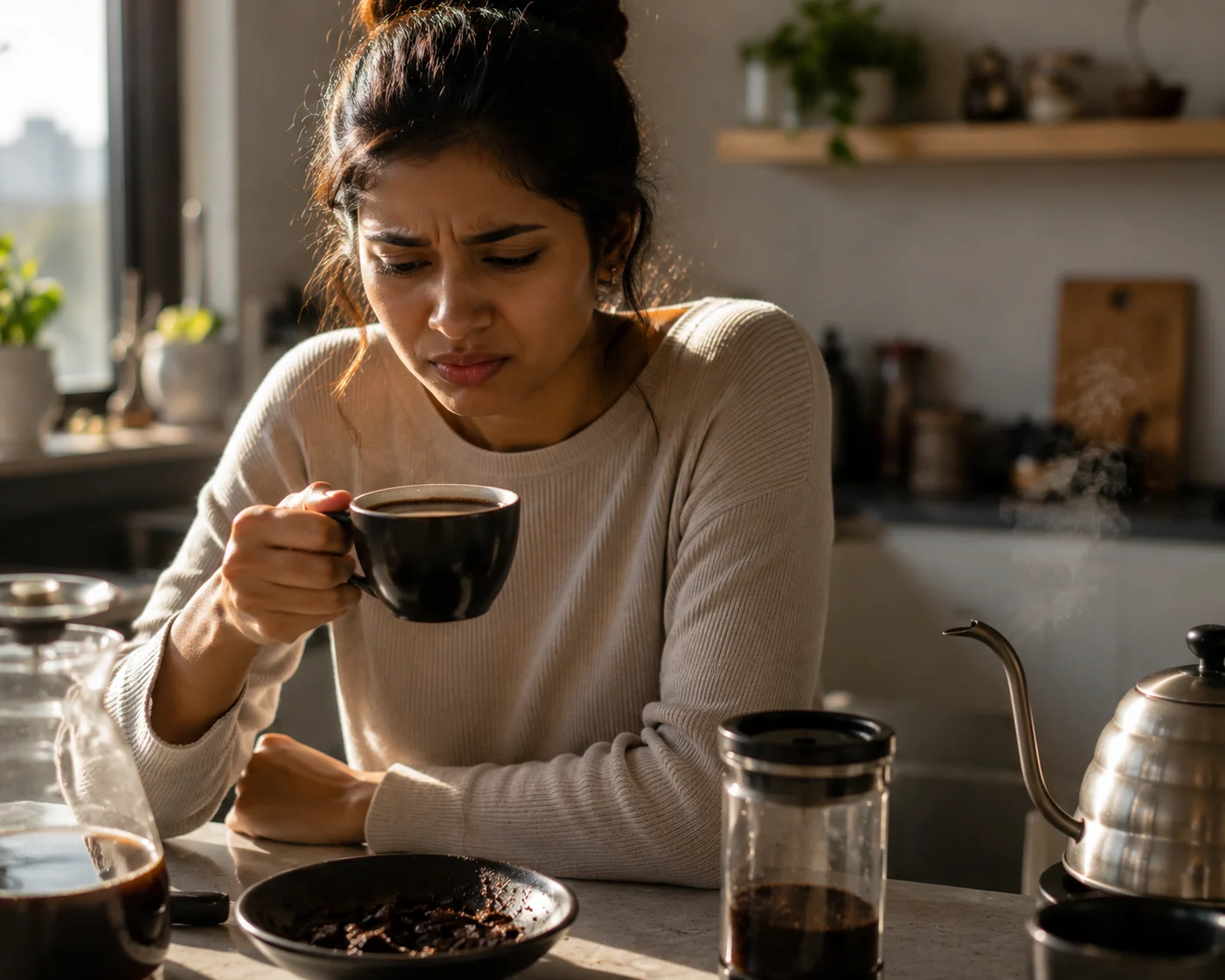
Have you ever brewed a fresh cup of coffee, taken the first sip, and immediately thought, “Why does my coffee taste so bitter?”
You are not alone.
Bitter coffee is one of the most common problems people experience at home. And while some bitterness is completely normal coffee naturally contains bitter compounds an unpleasant, harsh, or burnt taste usually means something went wrong during brewing.
The good news?
You probably do not need a new coffee machine or a completely different coffee.
A few small changes can make a surprisingly big difference.
From using the wrong grind size to brewing for too long, there are several reasons your coffee may taste bitter. Once you understand them, making a smoother and more balanced cup becomes much easier.
Let’s look at the nine most common reasons coffee tastes bitter and, more importantly, what you can do about each one.
Is Coffee Supposed to Taste Bitter?
A little bitterness is normal in coffee.
Coffee contains naturally occurring compounds that contribute to bitterness, and roasting also creates flavours that can taste bitter, especially in darker roasts.
The problem is when bitterness completely dominates the cup.
Good coffee should generally have a balance between sweetness, acidity, bitterness, aroma, and body. Depending on the coffee, you may notice flavours such as chocolate, caramel, nuts, fruit, flowers, or spices.
If all you can taste is bitterness, your coffee may be over-extracted, over-roasted, stale, or poorly brewed.
So before blaming the beans, let’s look at what might actually be happening.
1. Your Coffee Is Over-Extracted
One of the biggest reasons coffee tastes bitter is over-extraction.
Extraction is the process of pulling soluble compounds from coffee grounds into water.
You want enough extraction to create a balanced cup.
But if too much is extracted, the coffee can become harsh, dry, and bitter.
This can happen when:
- The brewing time is too long
- The coffee grounds are too fine
- The water is too hot
- You use too much agitation
- Your brewing method is not properly calibrated
How to Fix It
Start by reducing your brewing time.
If you are using a pour-over, try pouring a little faster.
If you are using a French press, avoid leaving the coffee sitting with the grounds for too long.
You can also try a slightly coarser grind.
Make one change at a time so you can understand what is actually improving the cup.
2. Your Grind Is Too Fine
Grind size has a major effect on extraction.
Fine coffee grounds have more surface area exposed to water. This allows water to extract compounds more quickly.
If your grind is too fine for your brewing method, your coffee may become over-extracted and bitter.
For example, using an espresso-style fine grind in a French press is likely to create problems.
General Grind Guide
| Brewing Method | Typical Grind |
|---|---|
| French Press | Coarse |
| Cold Brew | Coarse |
| Pour Over | Medium to Medium-Fine |
| Drip Coffee | Medium |
| Espresso | Fine |
| South Indian Filter | Fine |
These are starting points rather than absolute rules.
Your specific coffee, equipment, water, and brewing time can all affect the ideal grind.
The Simple Fix
If your coffee tastes bitter and you are already using a relatively long brewing time, try making the grind slightly coarser.
Then brew another cup.
Small adjustments can make a big difference.
3. Your Water Is Too Hot
Water temperature matters more than many home brewers realise.
Very hot water can increase extraction and potentially contribute to a harsh or bitter cup.
For many brewing methods, a water temperature around 90–96°C is a useful starting range.
You do not necessarily need a highly sophisticated kettle.
If you are boiling water in a standard kettle, simply allowing it to sit briefly after boiling can help bring the temperature down.
Try This
Instead of pouring freshly boiling water directly onto your coffee every time:
- Bring the water to a boil.
- Let it rest briefly.
- Start brewing.
- Compare the result.
If the bitterness decreases, your water temperature may have been part of the problem.
4. You Are Brewing for Too Long
More brewing time does not automatically mean better coffee.
It is tempting to think that leaving coffee to brew longer will produce a stronger and richer cup.
But there is a point where longer extraction can push the flavour in the wrong direction.
If your coffee tastes bitter, dry, or harsh, check your brewing time.
For Example
If your French press usually sits for a long time before you drink it, try shortening the brewing period.
If your pour-over is taking much longer than usual to drain, look at your grind size.
A slow brew can indicate that your grounds are too fine or that the filter is becoming clogged.
The goal is not simply to make coffee stronger.
The goal is to make it balanced.
5. You Are Using Too Much Coffee
Sometimes the problem is not the brewing process.
It is the ratio.
Adding more coffee grounds can make a cup taste stronger, but it does not necessarily make it taste better.
If you use significantly more coffee than your brewing method requires, the resulting cup can taste intense and unbalanced.
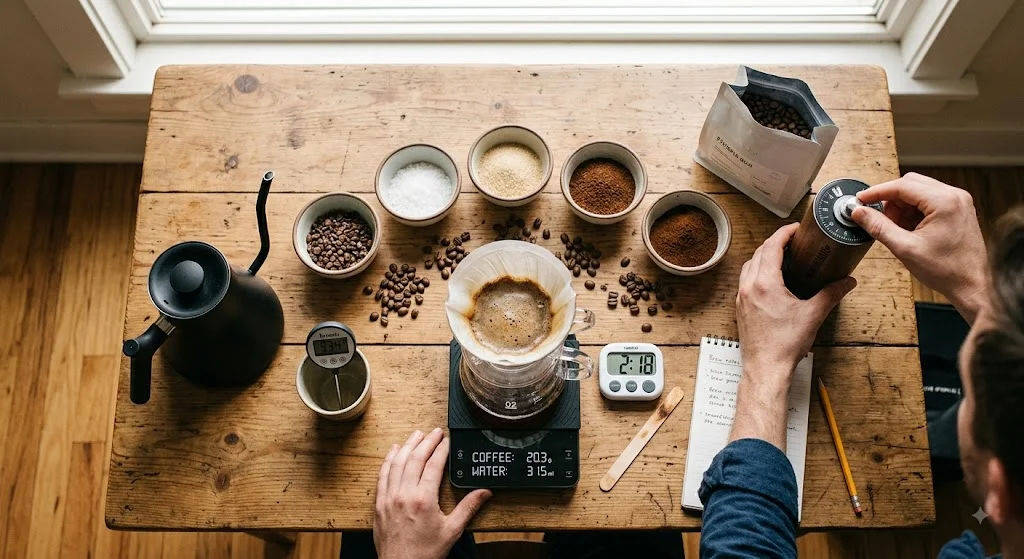
A useful starting point for many brewing methods is around 1 gram of coffee for every 15–17 grams of water.
For example:
20 g coffee + 300 g water = approximately 1:15
You can then adjust the ratio according to your preference.
If Your Coffee Is Too Strong
Try slightly increasing the amount of water rather than adding more sugar or milk.
You may find that the coffee becomes more balanced without losing its character.
6. Your Coffee Beans Are Too Dark for Your Taste
Dark roast coffee naturally tends to have a deeper, more roasted flavour.
You may notice characteristics such as:
- Dark chocolate
- Cocoa
- Toasted nuts
- Caramel
- Smokiness
- Roasted flavours
For people who enjoy bold coffee, these characteristics can be exactly what they want.
But if you prefer lighter and brighter flavours, a dark roast may taste overly bitter or intense.
Try a Different Roast
If your brewing technique seems fine but you still dislike the flavour, experiment with a medium roast.
Medium roasts often offer a balance between roast character and the coffee’s natural flavour.
You may discover that you do not dislike coffee.
You simply prefer a different roast style.
7. Your Coffee Is Stale
Freshness can make a noticeable difference to the flavour of coffee.
Coffee begins changing after roasting as it is exposed to oxygen, moisture, heat, and light.
As coffee loses freshness, its aroma and flavour can become flatter.
Old coffee may not always taste simply “bitter,” but it can taste dull, harsh, stale, or unpleasant.
How to Keep Coffee Fresher
Store your coffee:
- In an airtight container
- Away from direct sunlight
- Away from heat
- Away from moisture
- At room temperature
Avoid keeping coffee somewhere hot, such as directly beside your stove.
And if possible, buy an amount you can comfortably use while it is still fresh.
8. Your Coffee Machine or Equipment Needs Cleaning
This is one of the easiest things to overlook.
Coffee oils and residue can build up inside brewing equipment.
Over time, old coffee residue can affect the flavour of your fresh brew.
Your coffee may taste:
- Bitter
- Rancid
- Burnt
- Stale
- Unusually harsh
Even excellent beans can taste disappointing when brewed through dirty equipment.
What Should You Clean?
Depending on your brewing method, regularly clean:
- Coffee makers
- French presses
- Filters and filter holders
- Espresso equipment
- Grinders
- Carafes
- Reusable filters
Your grinder deserves particular attention.
Old coffee particles can remain inside it and mix with your fresh beans.
A clean brewing setup gives your coffee a much better chance of tasting the way it should.
9. Your Coffee Is Burnt
There is a difference between bitter coffee and burnt-tasting coffee.
A burnt flavour can come from very dark roasting, excessively hot brewing, or coffee that has been sitting on a hot plate for too long.
If you are using a drip machine and leaving your coffee on a warming plate for a long time, the flavour can become increasingly unpleasant.
The Solution
Make smaller batches.
Drink the coffee while it is fresh.
If you are brewing more than you need, consider using a thermal carafe instead of keeping the coffee hot on a warming plate.

How to Tell What Is Making Your Coffee Bitter
The easiest approach is to change one variable at a time.
If you change your beans, grind, water temperature, brewing time, and ratio all at once, you will not know which change fixed the problem.
Instead, use this simple troubleshooting guide:
| What You Notice | Possible Cause | Try This |
|---|---|---|
| Very bitter and dry | Over-extraction | Coarsen grind |
| Bitter and slow to brew | Grind too fine | Use a coarser grind |
| Harsh aftertaste | Water too hot | Lower temperature |
| Strong but unpleasant | Too much coffee | Adjust ratio |
| Smoky and intense | Roast too dark | Try medium roast |
| Flat and stale | Old coffee | Use fresher beans |
| Rancid or unpleasant | Dirty equipment | Clean your brewer |
| Burnt taste | Coffee kept hot too long | Brew smaller batches |
This approach makes troubleshooting much easier.
Does Dark Roast Coffee Always Taste More Bitter?
Not necessarily.
Dark roast coffee often has stronger roasted flavours, which can be perceived as more bitter, but bitterness is influenced by much more than roast level.
Brewing technique matters.
So does grind size.
So does water temperature.
So does freshness.
And, of course, personal taste.
A well-brewed dark roast can be rich, sweet, smooth, and satisfying.
A poorly brewed medium roast can still taste bitter.
That is why you should not automatically blame the roast.
How to Make Coffee Less Bitter
If you want a quick starting point, try these changes:
1. Use a Slightly Coarser Grind
Especially if your coffee is taking too long to brew.
2. Reduce Brewing Time
Do not let coffee sit with water longer than necessary.
3. Check Your Water Temperature
Aim for a suitable brewing temperature rather than using aggressively boiling water.
4. Check Your Coffee-to-Water Ratio
Start around 1:15 to 1:17 and adjust based on taste.
5. Try a Medium Roast
If dark roasts are consistently too intense for you.
6. Use Fresh Coffee
Fresh beans can offer better aroma and flavour.
7. Clean Your Equipment
Old coffee oils can ruin an otherwise good cup.
8. Taste Before Adding Sugar
Sugar can hide bitterness rather than solving the underlying brewing problem.
Understanding the cause gives you much more control over your coffee.
What If Your Coffee Tastes Sour Instead?
Interestingly, the opposite problem can also happen.
If your coffee tastes sharply sour, thin, or underdeveloped, it may be under-extracted.
This can happen when:
- The grind is too coarse
- Brewing time is too short
- Water temperature is too low
- You are using too little coffee
So remember:
Too much extraction can lead to bitterness.
Too little extraction can lead to sourness.
The sweet spot is balanced extraction.
The Goal Is Balance, Not the Absence of Bitterness
It is important to remember that good coffee does not have to taste completely free of bitterness.
Bitterness is one part of coffee’s flavour profile.
The goal is balance.
You want the bitterness to work alongside sweetness, acidity, body, and aroma rather than overpower everything else.
For example, a coffee with dark chocolate tasting notes may naturally have some pleasant bitterness.
That does not mean something is wrong.
The problem is when the bitterness becomes harsh, drying, or unpleasant.
Experiment Until You Find Your Perfect Cup
Coffee brewing is partly science and partly personal preference.
Two people can brew the same beans using the same equipment and prefer completely different results.
One person might enjoy a bold, intense cup.
Another might prefer something lighter and sweeter.
That is completely normal.
Start with the recommended brewing parameters, then make small adjustments.
Try a slightly different grind.
Change the brewing time.
Adjust your coffee-to-water ratio.
Experiment with temperature.
Taste.
Take notes.
And repeat.
Over time, you will learn exactly what works for your palate.
So, why does coffee taste bitter?
Usually, there is not one single answer.
Your coffee could be over-extracted, ground too finely, brewed too long, made with water that is too hot, or simply not suited to your taste.
The good news is that most of these problems are easy to fix.
Before buying new equipment, start with the basics:
Check your grind.
Check your brewing time.
Check your water temperature.
Check your coffee-to-water ratio.
Check your beans.
Check your equipment.
Make one small change at a time.
And remember: the perfect cup of coffee is not necessarily the strongest, darkest, or most expensive one.
It is the cup that tastes balanced and enjoyable to you.


