
When people talk about famous coffee-producing countries, conversations often move toward Ethiopia, Colombia, Brazil or Central America.
But India has a coffee story of its own.
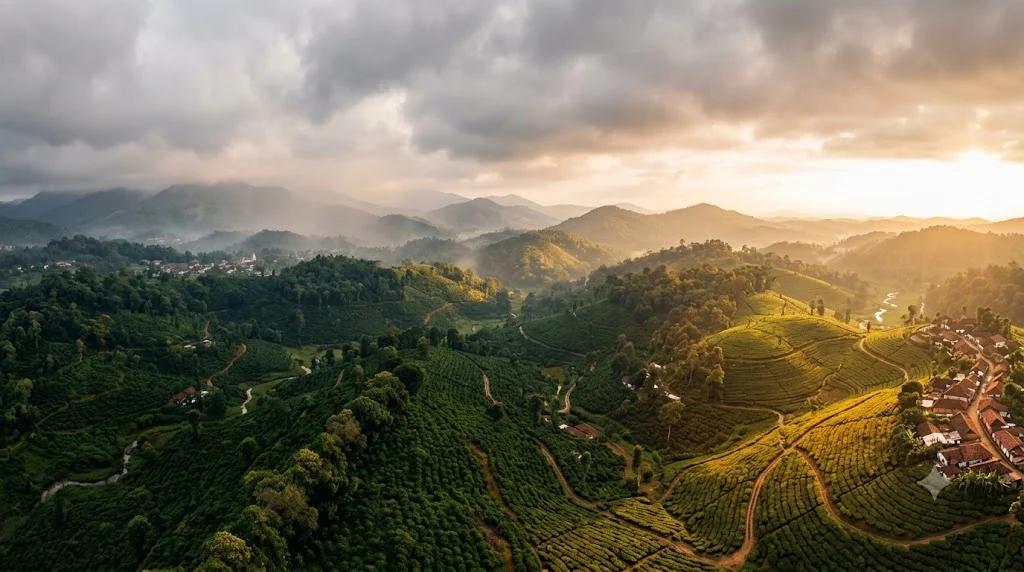
It is a story shaped by mountains, forests, monsoon rains, shade-grown plantations, distinctive growing regions, and generations of cultivation.
And today, Indian coffee is becoming increasingly interesting for people who want more than a generic cup.
The reason is simple:
Indian coffee can have character.
Its flavour can be shaped by where it grows, how it is processed, how it is roasted and how it is brewed.
Cherritos Coffee sources from Indian coffee-growing regions including Chikmagalur, Coorg and Bababudangiri, with a focus on preserving the identity of the beans through careful roasting.
So what makes Indian coffee worth exploring?
Let’s go back to the beginning.
Coffee Starts With Place
Before coffee becomes a roast, it is an agricultural product.
That means geography matters.
Altitude matters.
Rainfall matters.
Soil matters.
Temperature matters.
Shade matters.
Processing matters.
All of these factors can influence the final cup.
This is why two coffees from the same country can taste completely different.
India’s coffee-growing landscape is particularly interesting because different regions offer different environmental conditions.
Chikmagalur.
Coorg.
Bababudangiri.
Nilgiris.
Wayanad.
Each contributes to the broader story of Indian coffee.
Chikmagalur: A Classic Coffee Region
Chikmagalur is one of India’s best-known coffee-growing regions.
Located in Karnataka, it has a long association with coffee cultivation.
The region’s hills, climate and growing conditions make it suitable for Arabica cultivation.
Cherritos describes Chikmagalur coffee as capable of offering balanced characteristics including chocolate-like sweetness, nuttiness, mild acidity and smooth body.
For someone beginning to explore Indian specialty coffee, this kind of profile can be a comfortable starting point.
It doesn’t need to be aggressively intense.
Instead, it can offer balance.
And balance is often what makes a coffee easy to enjoy repeatedly.
Coorg: Where Coffee Meets the Monsoon
Coorg, or Kodagu, is another important coffee-growing region.
It is known for rich soils, heavy rainfall and lush landscapes.
Those environmental characteristics contribute to the region’s distinctive coffee identity.
But Coorg is not just about geography.
It is also about culture.
Coffee plantations exist within a landscape of forests, spices and traditional agricultural practices.
That connection between coffee and place makes origin-based drinking fascinating.
When you drink a Coorg-inspired coffee, you’re not simply tasting a roast profile.
You’re exploring an agricultural region.
Cherritos Coorg Mud Blend takes inspiration from this identity, combining earthy depth with delicate chocolate notes and a rich finish.
Bababudangiri: India’s Historic Coffee Landscape
Bababudangiri is another important name in India’s coffee story.
The high-altitude landscape is associated with nuanced coffee profiles, including subtle fruit and spice characteristics.
For coffee drinkers, high-altitude growing conditions can contribute to complexity.
That doesn’t automatically make a coffee “better.”
It simply means the growing environment can influence the character of the bean.
And that’s exactly why origin matters.
Why Arabica Matters
Cherritos focuses on 100% Arabica coffee.
Arabica is often appreciated for smoother and more nuanced flavour characteristics compared with Robusta.
That makes it particularly interesting for people who want to explore aroma, sweetness, body and flavour complexity.
But one important point is worth remembering:
Arabica doesn’t automatically mean every coffee tastes the same.
The final cup depends on much more.
Variety.
Origin.
Altitude.
Processing.
Roasting.
Grinding.
Brewing.
Storage.
So when you see “100% Arabica,” think of it as one part of the story—not the entire story.
Roasting Changes the Conversation
Even excellent green coffee can taste completely different depending on how it is roasted.
A lighter roast can preserve more of the bean’s origin characteristics.
A medium roast can create balance between origin and roast development.
A medium-dark roast can introduce more body, richness and deeper roasted flavours.
A dark roast can create intense chocolate, cocoa and bittersweet characteristics.
Cherritos uses small-batch roasting with the stated aim of preserving aroma, flavour and the natural characteristics of its coffees.
This is important because the roaster isn’t simply adding darkness.
They are making decisions about how the coffee should express itself.
Processing Also Matters
Coffee processing happens before roasting.
Different methods can influence the flavour profile.
Washed coffees can often have cleaner, brighter characteristics.
Natural processing can create fruitier and sweeter profiles.
Monsooned coffee has a particularly distinctive story.
During monsooning, coffee beans are exposed to humid monsoon conditions, changing their physical and sensory characteristics.
Cherritos Monsoon Malabar is positioned as a monsooned coffee with low acidity, earthy complexity and a rich body.
It demonstrates how dramatically processing and environment can influence coffee.
Indian Coffee Can Be Traditional and Modern
One of the most interesting things about Indian coffee culture is that it doesn’t have to choose between tradition and modernity.
You can enjoy South Indian Filter Coffee.
You can brew a pour-over.
You can make espresso.
You can use a French Press.
You can make cold coffee.
The same broad world of Indian coffee can exist across all of these methods.
Cherritos offers grind selections and brewing compatibility across methods including espresso, French Press, South Indian Filter, pour-over and other home brewing styles.
That flexibility is part of what makes specialty coffee exciting.
Why Fresh Roasting Matters
Imagine buying fresh bread and leaving it exposed for weeks.
The texture and aroma would change.
Coffee behaves differently, but freshness matters here too.
Freshly roasted coffee generally offers more pronounced aroma and flavour.
That’s why Cherritos emphasises small-batch roasting and fresh delivery.
The idea is simple:
Don’t treat coffee like a commodity.
Treat it like a fresh product.
Indian Coffee Is More Than a Morning Beverage
Coffee connects agriculture, geography, climate, craftsmanship and culture.
It begins at a plantation.
It passes through processing.
It is roasted.
It is ground.
It is brewed.
And finally, it becomes part of someone’s daily routine.
That journey is easy to forget when all you see is a cup.
But understanding it can completely change how you drink coffee.
The next time you make an Indian coffee, don’t just ask:
“Is it strong?”
Ask:
Where was it grown?
What roast is it?
What processing method was used?
What flavours can I detect?
How does the body feel?
What remains in the finish?
Those questions turn coffee from a routine beverage into an experience.
Discovering India’s Coffee Map One Cup at a Time
You don’t need to become a coffee expert overnight.
Start with one region.
Try Chikmagalur.
Then explore Coorg.
Then compare a high-altitude coffee.
Then try a monsooned profile.
Use the same brewing method whenever possible and compare the cups side by side.
You’ll begin noticing something important:
Indian coffee doesn’t have one flavour.
It has many.
And that’s precisely why it deserves a closer look.
Cherritos’ approach—Indian estate sourcing, 100% Arabica, small-batch roasting and a focus on preserving coffee character—fits naturally into that larger story.
The next time someone says great coffee has to come from somewhere else, pour them an Indian cup.
Then let the coffee do the talking.


