Have you ever opened a brand-new bag of whole-bean coffee, brewed a cup, and felt completely spellbound by the explosive aroma filling your kitchen? The notes of dark chocolate, caramel, and warm earthiness feel alive.
Then, three weeks later, you brew a cup using the exact same bag, the exact same water temperature, and the exact same equipment—but the magic is gone. The liquid tastes flat, woody, and uninspiringly bitter.
What went wrong? The coffee didn’t change; it oxidized.
In the world of 100% Arabica specialty coffee, freshness isn’t a vague marketing buzzword or an abstract concept. It is governed by a strict, chemical timeline. Because coffee beans are fundamentally a fresh agricultural product—packed with volatile organic oils, delicate lipids, and trapped carbon dioxide—they are in a constant state of decay the moment they leave the farm.
To help coffee lovers navigate this invisible ticking clock, professional roasters and baristas use a golden metric known as The 15-15-15 Rule. If you want to stop wasting premium beans and unlock the true flavor potential of your morning ritual, here is the science behind the countdown.
What is the 15-15-15 Coffee Rule?
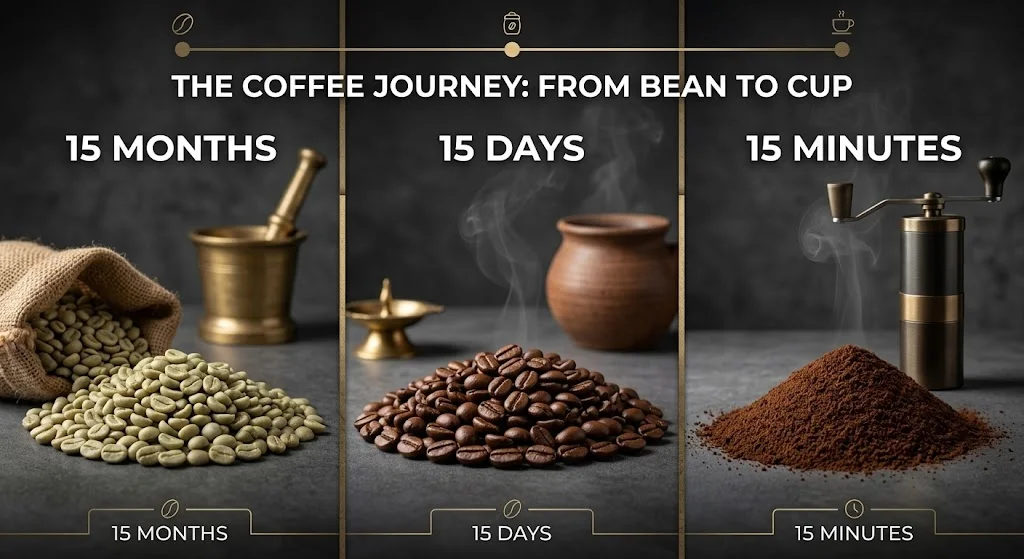
The 15-15-15 Rule acts as a critical freshness compass for every stage of a coffee bean’s journey:
- 15 Months: The maximum shelf-life of unroasted green coffee beans.
- 15 Days: The ultimate peak-flavor window for roasted coffee beans.
- 15 Minutes: The maximum time ground coffee retains its pristine aroma before breaking down.
Let’s dissect each phase of this rule to see exactly how it dictates the quality of what lands in your mug.
1. The First 15: Green Beans Have an Expiry Date (15 Months)
Before a coffee bean is roasted into a beautiful chocolate-brown state, it exists as a dense, pale green seed stripped from the center of a coffee cherry.
A common myth in the commodity trade is that raw green coffee beans can sit in burlap sacks inside dark warehouses indefinitely without losing quality. This is false. Green coffee is organic and holds a precise cellular equilibrium of ambient moisture (ideally between 10% to 12%).
As green coffee ages past 15 months from its harvest date, it steadily loses its organic moisture. The trapped chemical compounds degrade, and the bean enters what roasters call a “past-crop” state.
Why Sourcing Matters
When roasters use past-crop green coffee, the resulting brew tastes papery, flat, and hollow. This is why Cherritos Coffee Co. completely bypasses mass-bulk storage systems. By working directly with elite, sustainable estates across legendary regions like Coorg, Chikmagalur, and Bababudangiri, they ensure that only fresh-crop, current-harvest green beans are brought to the roasting drum.
2. The Second 15: The Roaster’s Sweet Spot (15 Days)
When green beans enter a professional drum roaster, an explosive chemical transformation occurs. The intense, monitored heat causes sugars to caramelize, organic acids to develop, and volatile aromatic oils to surge to the surface.
The moment those beans tumble out into the cooling tray, a massive structural countdown begins.
[Day 0: Roast Date] ---> [Days 3-5: Degassing Peak] ---> [Days 7-15: The Golden Window] ---> [Day 30+: Oxidation Fade]
The Oxygen Enemy
Roasted coffee beans are structurally highly porous, acting like microscopic sponges. When exposed to oxygen, the delicate lipids and essential aromatic oils oxidize rapidly, turning rancid and stale.
According to the 15-15-15 rule, roasted whole beans hit their absolute zenith of flavor complexity and balance between 7 to 15 days post-roast.
- The Degassing Phase (Days 1–5): Freshly roasted coffee contains a high concentration of trapped Carbon Dioxide (CO₂). If you try to brew beans immediately on Day 1, the rushing gas physically blocks water from extracting the coffee’s true flavors, resulting in a sour, uneven cup.
- The Golden Window (Days 7–15): The excess CO₂ has calmed down, leaving behind a pristine shield that protects the oils while allowing water to flawlessly extract the deep dark chocolate, caramel, and berry notes.
- The Industrial Trap: Commercial store-bought coffees rarely feature a “Roast Date”. Instead, they use a vague “Best Before” date that is usually 12 to 24 months into the future. By the time you buy it, those beans have been sitting stale on grocery shelves for half a year.
3. The Final 15: The Ground Collapse (15 Minutes)
This is where the vast majority of home brewers accidentally ruin their coffee experience. You could buy the finest single-estate bean in the world, but if you buy it pre-ground, you are fighting a losing battle against physics.
Whole coffee beans act as natural protective capsules, sealing the fragile aromatic gases and oils inside. When you grind a whole bean, you shatter that capsule into thousands of tiny fragments.
While this grind is necessary to let water extract the flavor, it increases the total surface area of the coffee by over 1,000%.
Oxygen floods the exposed particles instantly. Within a mere 15 minutes of grinding, pre-ground coffee loses up to 60% of its ambient aromatics and volatile compound complexity. The vibrant fruitiness and crisp acidity fade away, leaving behind a dull, flat, and uniformly bitter powder.
If you want to experience the true depth of a complex profile like the Cherritos Millennium Blend, the single greatest upgrade you can make to your kitchen is a manual or electric burr grinder, allowing you to grind your coffee exactly 60 seconds before brewing.
How to Audit and Protect Your Coffee Freshness
Now that you understand the science of the 15-15-15 countdown, you can actively change your habits to stop drinking stale fuel. Use these three professional storage rules to defend your beans:
❌ Say No to the Fridge
A common kitchen mistake is storing coffee bags inside the refrigerator or freezer. Coffee is hygroscopic—it absorbs moisture, odors, and condensation from its surroundings. Every time you open a cold jar of coffee in a warm room, micro-condensation forms on the beans, jumpstarting the staling process and making your premium coffee taste like yesterday’s leftovers.
🫙 The Airtight, Opaque Shield
Keep your whole beans stored at room temperature in a completely dark, airtight ceramic, stainless steel, or tinted glass canister. Keep it away from direct sunlight, the stovetop, or heat-emitting appliances.
💨 Respect the One-Way Valve
If you keep your coffee in its original packaging, ensure the bag features a small, plastic circular screen near the top. This is a one-way degassing valve. It allows the natural carbon dioxide escaping from fresh beans to exit the bag without letting destructive oxygen creep inside.

The Freshness Promise
You shouldn’t have to settle for dead, flat coffee that requires syrups to taste interesting. At Cherritos Coffee Co., the entire supply chain is engineered around the 15-15-15 rule.
Beans are sourced fresh from current-crop Indian estates, roasted strictly in small batches, stamped with an explicit, honest roast date, and shipped directly to your doorstep so they land perfectly inside that magical golden window.
Ditch the stale commercial bricks. Invest in whole beans, grind fresh, respect the countdown, and taste coffee the way nature intended.