
We live in a world that worships convenience. We want our internet high-speed, our deliveries instant, and our morning wake-up call to take less than sixty seconds.
For millions of households across India, the morning ritual looks identical: boil water or milk, rip open a sachet of commercial instant coffee powder, stir, and gulp. It is fast, it is cheap, and it delivers a predictable hit of caffeine.
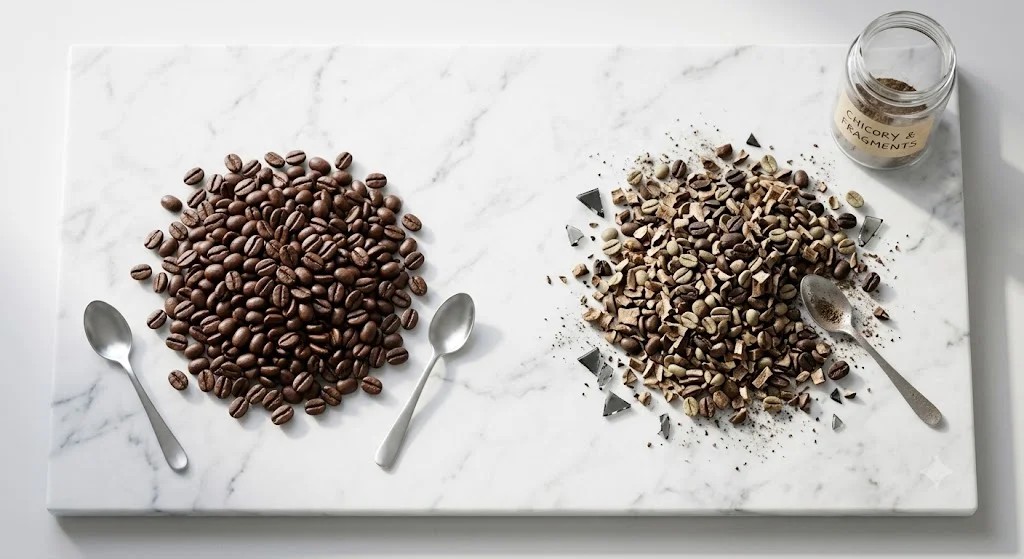
But have you ever paused to look at what is actually inside that powdery jar or single-serve packet?
If you are drinking mass-produced commercial instant coffee, you are participating in a global manufacturing trade-off. To give you speed and an artificially low price point, industrial brands sacrifice flavor, transparency, your health, and the environment.
Transitioning to 100% Arabica freshly roasted specialty coffee isn’t an elite luxury trend. It is an investment in pure ingredients, authentic craft, and clean energy. Here is the unfiltered truth about what happens behind the scenes of commercial instant coffee, and why making the switch changes everything.
1. The Industrial Autopsy: How Instant Coffee is Actually Made
To understand why commercial instant coffee tastes flat, bitter, and muddy, you have to look at the violent mechanical process required to create it.
Instant coffee isn’t just ground coffee beans. It is pre-brewed, hyper-dehydrated liquid coffee sludge that has been processed into a shelf-stable powder. The manufacturing chain looks like a heavy chemical factory rather than an artisanal kitchen:
- The Lowest Grade Beans: Industrial brands buy the cheapest beans available on the global market—primarily low-grade Robusta beans that are rejected by the specialty sector due to insect damage, mold, or under-ripeness.
- The Mega-Brew: These low-grade beans are roasted at extreme temperatures to burn off the chemical defects, ground up, and brewed in gigantic industrial vats under intense pressure to create a massive, hyper-concentrated coffee liquor.
- The Dehydration Blast: This liquid concentrate is then stripped of its moisture using one of two violent methods: Spray-Drying (spraying the liquid into a tower of roaring hot air, which instantly dries the droplets into fine powder) or Freeze-Drying (freezing the liquid down to -40°C and forcing it through a vacuum sublimation chamber).
By the time the coffee undergoes this intense heat, pressure, and dehydration, nearly all of its natural volatile aromatic oils are completely destroyed. To make up for this loss of flavor, industrial factories routinely spray synthetic coffee aromas back onto the dried particles right before they are sealed into jars. You aren’t smelling real coffee; you are smelling a laboratory perfume.
2. The Hidden Filler: The Truth About the Chicory Blend
Turn around almost any mainstream commercial coffee pack sold in retail stores and read the fine print under the ingredients section. You will likely see a percentage breakdown: “53% Coffee, 47% Chicory.”
What is chicory? It is the roasted root of a woody herbaceous plant (Cichorium intybus). It contains absolutely zero caffeine, zero coffee antioxidants, and possesses an intensely bitter, woody, and almost medicinal taste profile.
Mass-market brands do not include chicory to enhance your morning experience. They include it as a cheap bulk filler to dramatically cut manufacturing costs. By replacing nearly half the bag with roasted root vegetables, they can sell the product at rock-bottom prices.
Because robusta beans mixed with chicory create a harsh, incredibly bitter liquid, you are practically forced to drown your cup in multiple teaspoons of refined sugar, condensed milk, or synthetic creamers just to make it palatable.
Specialty coffee roasters like Cherritos Coffee Co. operate on a completely different ethos: 100% pure coffee, zero chicory, and zero fillers. When you brew high-grade Arabica beans, the naturally sweet, chocolatey, and smooth profile means you don’t need to mask the liquid. It stands beautifully on its own.
3. The Nutritional Trade-Off: Pure Antioxidants vs. Acrylamide
Beyond the stark difference in flavor, the chemical composition of what you are putting into your body every morning matters.
Pure, freshly roasted coffee beans are one of the richest dietary sources of polyphenols and antioxidants in the human diet. These compounds protect cells from oxidative stress, boost metabolic health, and support cognitive function.
However, because instant coffee undergoes intense industrial heat processing, its chemical balance changes:
- The Acrylamide Problem: Acrylamide is a chemical compound that naturally forms in certain foods during high-temperature cooking and roasting. Medical studies show that instant coffee contains up to double the concentration of acrylamide compared to fresh, small-batch roasted coffee.
- Digestive Distress: The combination of low-grade robusta beans (which naturally contain double the caffeine and harsher acids than Arabica) and chemical additives frequently causes the acid reflux and sour stomach jitters commonly blamed on “coffee.” Pure, clean specialty Arabica coffee is remarkably gentle on the stomach.
4. The Math of Value: Why Cheap Coffee is an Illusion
The primary defense for commercial instant coffee is that it is cheap. But when you break down the math of what you are paying for, the illusion falls apart.
When you buy a premium 250-gram bag of freshly roasted Cherritos Specialty Coffee, you are getting 100% usable, high-density coffee grounds. A standard cup uses roughly 12 to 15 grams of coffee. That single bag yields around 18 to 20 pristine, cafe-quality cups of coffee at home.
When you factor in the true cost of instant coffee—where half the jar is cheap chicory root, and you have to use double the sugar and milk to balance the bitterness—you aren’t actually saving money. You are paying a premium price for processed agricultural waste and artificial flavor sprays.
5. Overcoming the Friction: The Simple Home Switch
The biggest barrier keeping people hooked on instant coffee isn’t the price; it’s the fear that brewing real coffee takes too much time and complicated equipment.
You do not need a fancy espresso machine or a complex digital scale to escape the instant trap. The transition to fresh beans can be effortless:
The Channi Method (Zero Equipment)
You can brew fresh, medium-dark specialty coffee using items you already own. Simply place 2 tablespoons of medium-ground coffee into a vessel, pour hot water over it, let it steep for 4 minutes, and pour it into your mug through a standard mesh tea strainer (channi). It takes the exact same amount of time as instant, but tastes infinitely cleaner.
The French Press (The 4-Minute Ritual)
Investing in a simple, affordable French Press completely transforms your mornings. Add coarse grounds, pour hot water, press the plunger down after 4 minutes, and enjoy a rich, full-bodied, naturally sweet cup with a beautiful mouthfeel.

Step Out of the Instant Loop
Your mornings set the tone for your entire day. You can start it with a highly processed, synthetic caffeine jolt engineered in a mass industrial furnace. Or you can start it with an authentic, farm-to-cup ritual that celebrates clean ingredients, rich aromas, and genuine craft.
It’s time to throw away the dusty instant jar. Treat your body, your palate, and your morning routine with the respect they deserve. Switch to fresh, small-batch roasted coffee and taste what you’ve been missing.